
Navigating the Cybersecurity Job Market in the AI Era
A Comprehensive Guide to Getting Started


Today, we’re tackling a hot topic: entering the cybersecurity job market in 2026, amid the rise of AI. The field is booming, but AI is automating routine tasks and even threatening higher-level roles by 2028. Don’t panic—opportunities abound if you adapt. We’ll cover the market overview, AI’s impact, selecting your path, building skills, gaining experience, job hunting, interview prep, and thriving long-term. Let’s dive in.
1. Overview of the Cybersecurity Job Market in 2026
The cybersecurity job market remains one of the hottest sectors globally, driven by escalating threats like ransomware, state-sponsored attacks, and supply chain vulnerabilities. According to recent reports, the global cybersecurity market is projected to reach $300 billion by 2026, with spending on AI-integrated security solutions surging. Demand for skilled professionals is high—there’s a shortage of about 3.5 million cybersecurity workers worldwide, per Cybersecurity Ventures’ 2026 predictions.
In the U.S. and Europe, entry-level roles like cybersecurity analysts start at $80,000–$120,000, while senior positions like CISOs can exceed $250,000. Growth is fueled by regulations and emerging AI laws, plus the integration of AI in defenses. However, AI is a double-edged sword: It’s creating jobs in AI security governance but displacing others in monitoring and basic analysis.
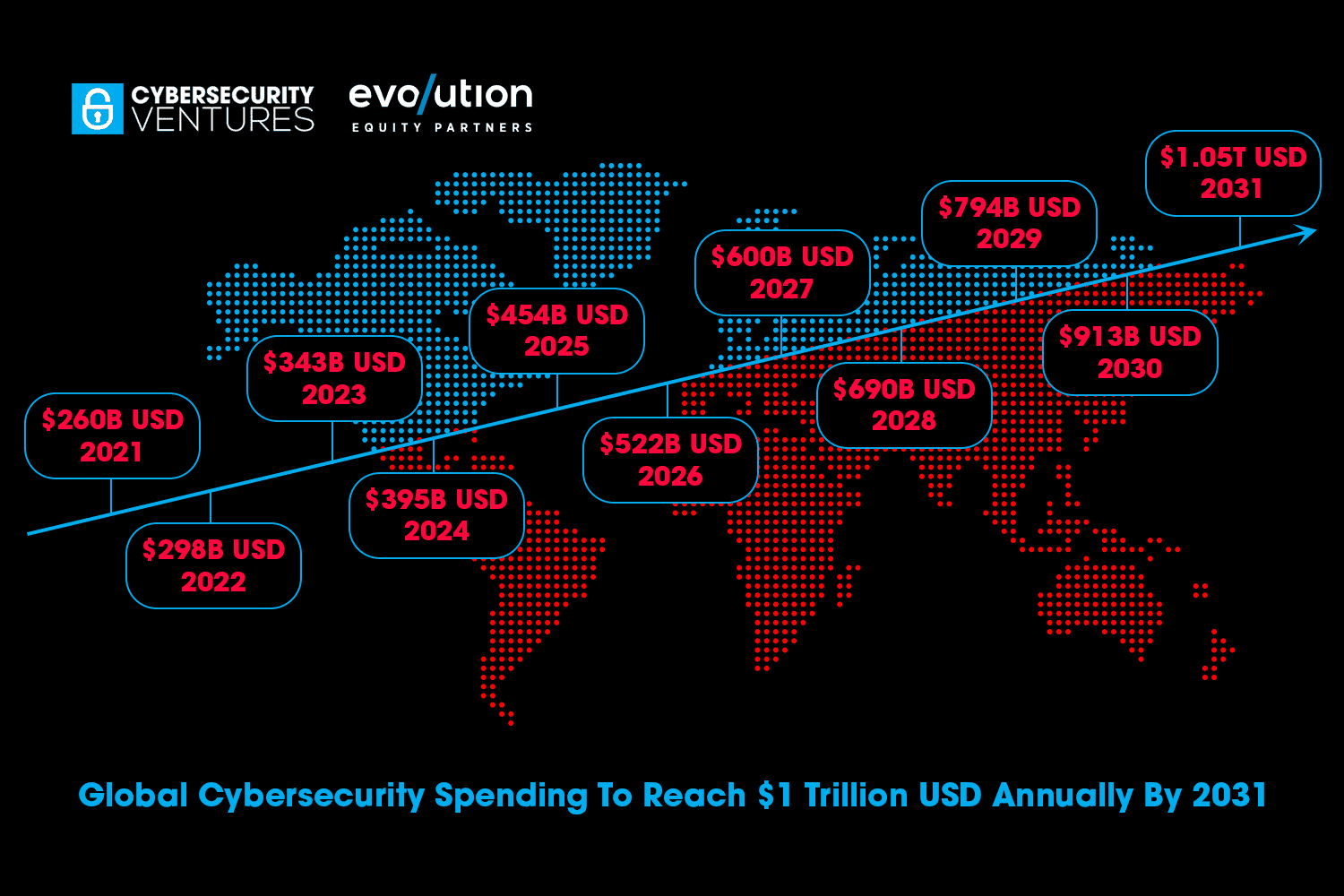
From the chart above (sourced from Cybersecurity Ventures), cybersecurity spending is skyrocketing, indicating robust job growth. But as IBM’s 2026 predictions note, AI will handle 50% of threat detection by year-end, shifting human roles toward strategy and oversight.
Key trends:
High Demand Areas: Cloud security, AI ethics, and zero-trust architectures.
Regional Variations: In Europe, compliance-focused roles are exploding due to strict regs; in the U.S., offensive security (pen testing) is hot.
Entry Barriers: Many jobs require certifications, but hands-on experience trumps degrees.
Despite the buzz, unemployment in cybersecurity is low (~1%), but competition is fierce for juniors. With AI on the rise, focus on human-centric skills like critical thinking and communication to future-proof your career.
2. The Impact of AI on Cybersecurity Careers
AI isn’t just a tool—it’s a disruptor. By 2026, AI-driven threats will rise, per Dark Reading’s predictions, but so will defenses.
Jobs at Risk:
Routine Roles: Security monitoring, log analysis, and basic penetration testing—AI can do these faster and cheaper.
Mid-Level Analytics: Tools like AI-powered SIEMs (Security Information and Event Management) reduce the need for manual threat hunting.
Jobs That Thrive:
Strategic and Governance: AI oversight, ethical hacking with human intuition, and regulatory compliance—humans are needed for accountability.
Hybrid Roles: AI security engineers who build and manage AI defenses.
Creative Niches: Incident response leadership, where empathy and decision-making in crises matter.
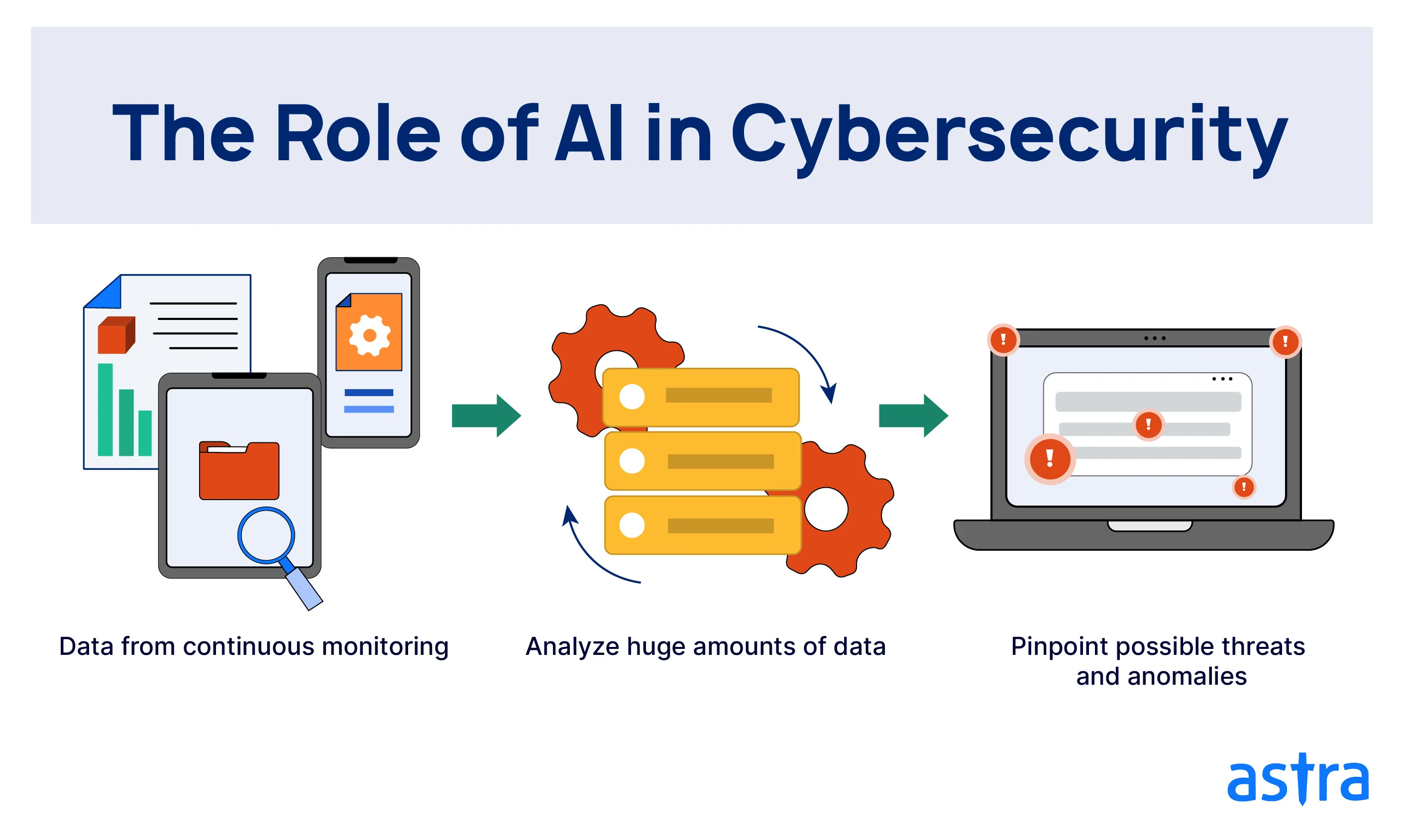
As illustrated above (from Astra Security), AI enhances cybersecurity but introduces risks like adversarial AI attacks. Forbes predicts that in 2026, hiring will emphasize “standing out as human,” with AI flooding resumes but humans excelling in interviews.
To adapt: Learn AI basics (e.g., machine learning for threat detection) and pivot to roles like AI Governor—overseeing AI ethics and integration.
3. Understanding the Cybersecurity Landscape
Before picking a path, grasp the basics. Cybersecurity protects digital assets through the CIA triad: Confidentiality (data accessible only to authorized users), Integrity (data accuracy and trustworthiness), and Availability (reliable access).
Key areas from the guides:
Information Security: Protects data from unauthorized access, ensuring confidentiality, integrity, and availability.
Network Security: Shields networks from intruders like malware or hackers.
Application Security: Secures software and devices against threats.
Operational Security: Processes for handling and protecting data assets.
Disaster Recovery & Business Continuity: Response to incidents causing operational loss.
Legal, Regulations, Compliance, & Investigations: Deals with laws, compliance, and breach forensics.
Why it matters: In today’s world, threats like phishing, ransomware, and AI-generated deepfakes are rampant. Work environments range from high-stakes SOCs (Security Operations Centers) to remote consulting, with competitive pay and benefits like flexible hours and stock options.
4. Selecting Your Path: Overview of All Cybersecurity Paths
Cybersecurity isn’t one-size-fits-all. Assess your skills: Technical (coding, networking)? Analytical (problem-solving)? Communication (for compliance roles)? Interests: Hacking (offensive), defending (defensive), or rules (GRC—Governance, Risk, Compliance)?
Major Paths:
Offensive Security (Red Team): Ethical hacking to find vulnerabilities. Roles: Penetration Tester ($80K–$130K). Suited for curious, detail-oriented folks. In AI era: Humans excel at creative exploits AI can’t predict.
Defensive Security (Blue Team): Protecting systems. Roles: Cybersecurity Analyst ($114K–$160K), Network Security Engineer ($120K–$208K), Cyber Security Engineer ($126K–$213K). Focus on monitoring and response. AI impact: Automates basics; humans handle complex incidents.
GRC (Governance, Risk, Compliance): Policy, audits, legal. Roles: Information Security Manager ($150K–$225K), Application Security Engineer ($130K–$200K). Ideal for strategic thinkers. AI-resistant: Requires human judgment on ethics and regs.
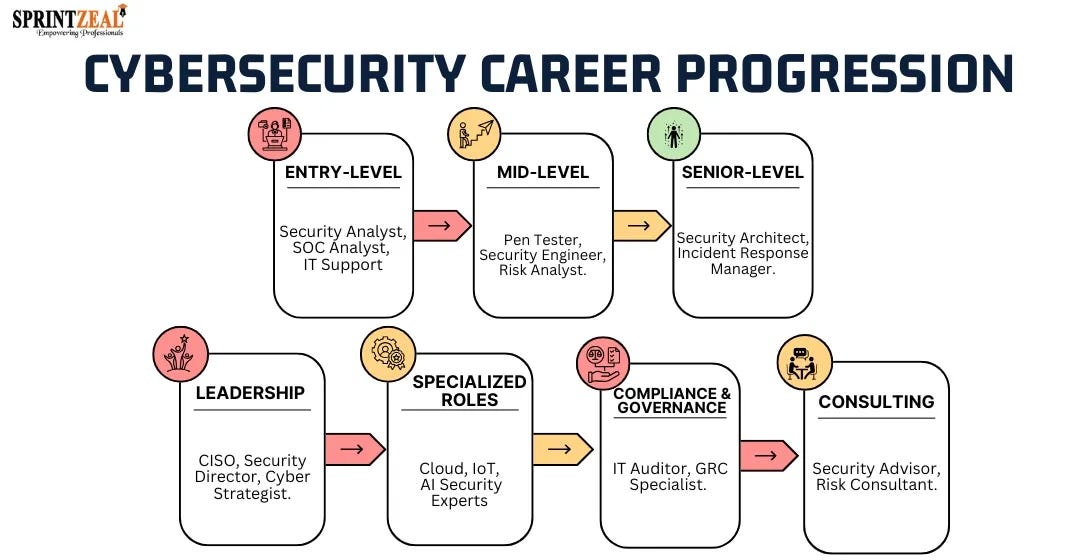
The infographic above (from Sprintzeal) maps common paths. Start entry-level (analyst), advance to specialist (engineer), then leadership (manager/CISO). In AI times, choose paths like AI-integrated GRC for longevity.
Career Progression Example:
Entry: Analyst (gain experience).
Mid: Engineer/Consultant (specialize).
Senior: Manager/CISO (lead teams).
5. Building Essential Skills
Once you’ve picked a path, skill up. Focus on technical (networking, encryption) and soft skills (communication, problem-solving).
Certifications:
Entry: CompTIA Security+ (vendor-neutral, covers basics).
Advanced: CISSP (for management), CEH (for ethical hacking).
Avoid: Free certs like Google’s—they teach but don’t impress recruiters. Bootcamps? Expensive and unnecessary; self-study via platforms like Coursera or TryHackMe.
In AI era: Add AI/ML certs (e.g., Google Professional Machine Learning Engineer) to understand AI threats.
Self-Education Tips:
Online courses: Free on YouTube or paid on Udemy.
Books: My Ransomware Handbook for practical insights. (Free if you subscribe to me)
Labs: Set up a home lab with VirtualBox for simulating attacks.
Aim for 3–6 months of dedicated learning before applying.
6. Gaining Practical Experience
Experience is king—even for entry roles. Guides emphasize hands-on over theory.
Strategies:
Home Projects: Secure your network, run vulnerability scans with tools like Nmap, document on GitHub.
Volunteer: Offer services to nonprofits or open-source projects.
Internships/Entry Roles: Start in IT support to pivot into security.
Capture the Flag (CTF): Competitions on HackTheBox build skills.
In AI context: Build projects integrating AI, like using Python to automate threat detection. This demonstrates adaptability.
7. Job Hunting Strategies
Tailor your resume: Highlight skills, projects, certs. Use keywords from job descriptions (e.g., “NIST framework”).
Network: LinkedIn, industry events, forums like Reddit’s r/cybersecurity. Connect with pros—I’ve mentored many via my coaching.
Apply widely: Don’t fear rejection; interviews build confidence.
In AI era: Emphasize human strengths—e.g., “Led team in ethical AI risk assessments.”
Tools: Job sites like Indeed, specialized firms for cybersecurity.
8. Preparing for Interviews
Research the company: Know their threats and culture.
Practice: Common questions like “Explain a SQL injection” or “How would you handle a breach?”
Dress professionally, follow up with thanks.
AI twist: Be ready for questions on AI ethics or tools like ChatGPT in security.
9. Adapting and Thriving in the AI Era
From my book: Pivot to “AI-Era Governor” roles—overseeing AI agents. Build hybrid orgs: Humans + AI for efficiency.
Stay current: Continuous learning via webinars, my Substack.
Long-term: Aim for CISO, but prepare for AI oversight. Policy responses like AI taxes could protect jobs, but proactive skilling is key.
Conclusion
Entering cybersecurity in 2026 is exciting, even with AI looming. Focus on adaptable paths, hands-on skills, and human edges. You’ve got this—start today.