
ISO 27001 for SaaS
Growth Engine or Capital Sinkhole?


In the 2026 market, “compliance” has become a buzzword that drains bank accounts. For a lean SaaS team, the question isn’t just “How do we get certified?” but “Will this actually deposit money into our bank account?”.
1. The Hard Truth: Do You Actually Need It?
Based on my experience managing global risk for institutions worth $1 quadrillion, the answer is often No.
The Over-Certification Trap: Many founders fall into “Overlapping Qualifications,” paying for multiple redundant certifications (SOC 2, ISO 27001, Cyber Essentials) before they have the revenue to justify them.
The “Client-First” Rule: Unless an Enterprise lead has explicitly stated that a signature is contingent on a certificate, do not spend the capital.
The Bootstrap Negotiation: If you are early in the acquisition phase and a prospect demands ISO 27001, negotiate a Proof of Value (PoV) or Proof of Concept (PoC). Secure a smaller financial commitment first. Use that revenue to fund your roadmap toward full certification rather than draining your seed capital upfront.
2. The Cost Reality
For a 10–20 person SaaS team, you aren’t just paying an auditor. You are paying in velocity.
Hard Costs: Between audit fees, compliance automation tooling (Vanta/Drata), and potential external consulting, expect a baseline of $20,000–$40,000.
Soft Costs: Your Lead Engineer will lose roughly 20% of their bandwidth over 4–6 months.
How to Slash Costs: Stop over-engineering. Most small SaaS teams try to implement “Enterprise-grade” controls they don’t need. Focus on the efficiency by automating the “repeatable” tasks early to keep your team focused on shipping code.
3. Real-World Stories: The “Fake It” Failures
In my experience, I have seen small teams try to “shortcut” the process. It always backfires.
The “PDF Cemetery”: One SaaS team bought a template pack and “signed” 40 policies in a single afternoon. During the audit, I asked a developer how they handle access revocation. They had no idea the policy even existed. Finding: Major Non-Conformity.
The “Ghost” Risk Assessment: I’ve seen teams present a risk register that hasn’t been updated in a year, despite launching an entire AI-driven feature set. In 2026, if you aren’t auditing your Agentic AI logic, you aren’t compliant with the EU AI Act or ISO 27001.
4. The 2026 SaaS Strategy: The “Trust Portal”
If you decide to proceed, do not just treat it as a certificate on the wall. Turn it into a Revenue Generator.
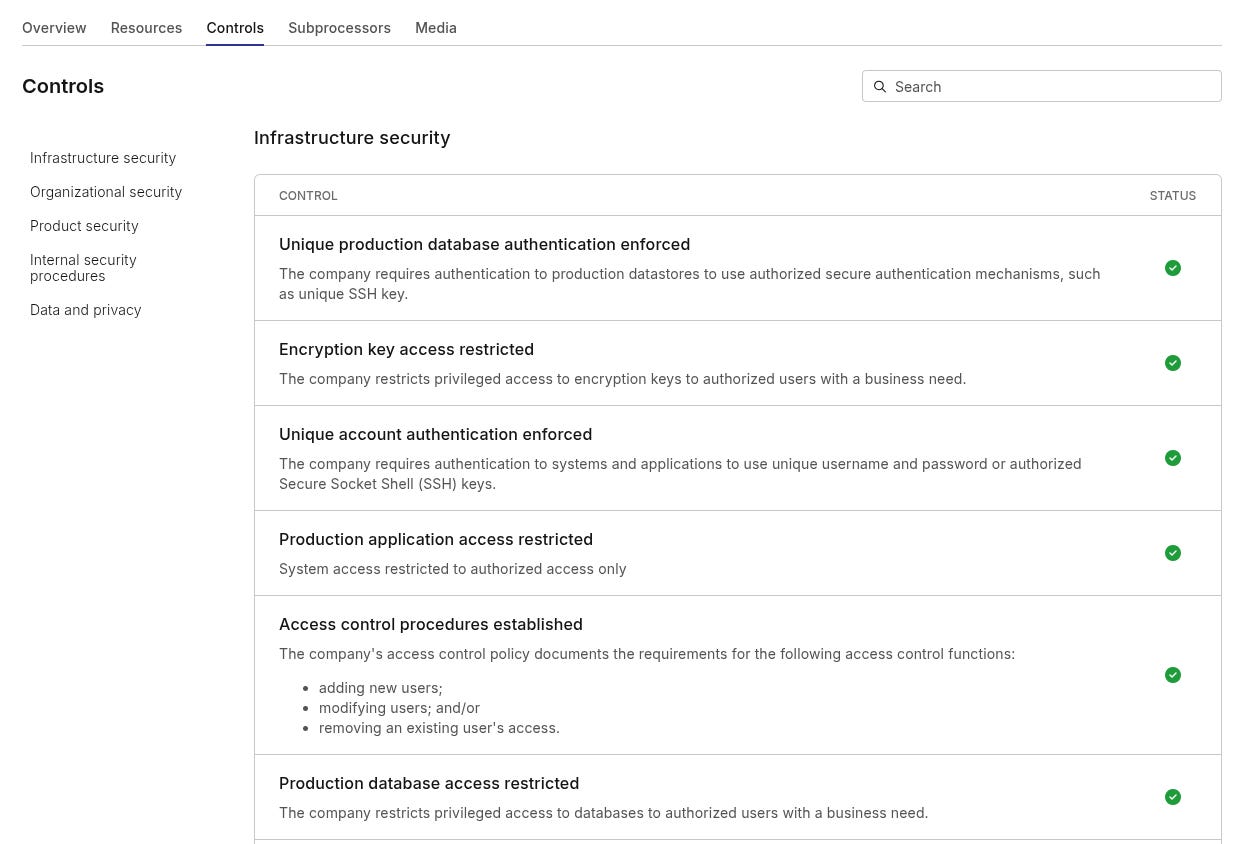
The Customer Trust Portal: Use your tooling (like Vanta or Drata) to create a public-facing page where prospects can self-serve your security docs.
The Sales Accelerator: This eliminates the “Security Questionnaire” bottleneck, moving your deal from “Legal Review” to “Signed” weeks faster.
The CoachHub Trust Center is a perfect example. By moving their security documentation from a 'request-only' black box to a real-time portal, they have turned compliance into a primary driver of customer retention and merchant trust.
Final Verdict
Build your security program to be Repeatable from day one—it’s just good engineering. But don’t pay the “Certification Tax” until the market forces your hand. When they do, treat it as a sales tool, not a technical burden.